
Wind and dust protection for your RV
The real weather story in the Basin is not the cold — it is the wind, and the dust it carries. The National Weather Service describes blowing dust as frequent through late winter and early spring, on flat plains with little vegetation to slow the wind down. If you are living in a rig here, that is the thing to set up for.
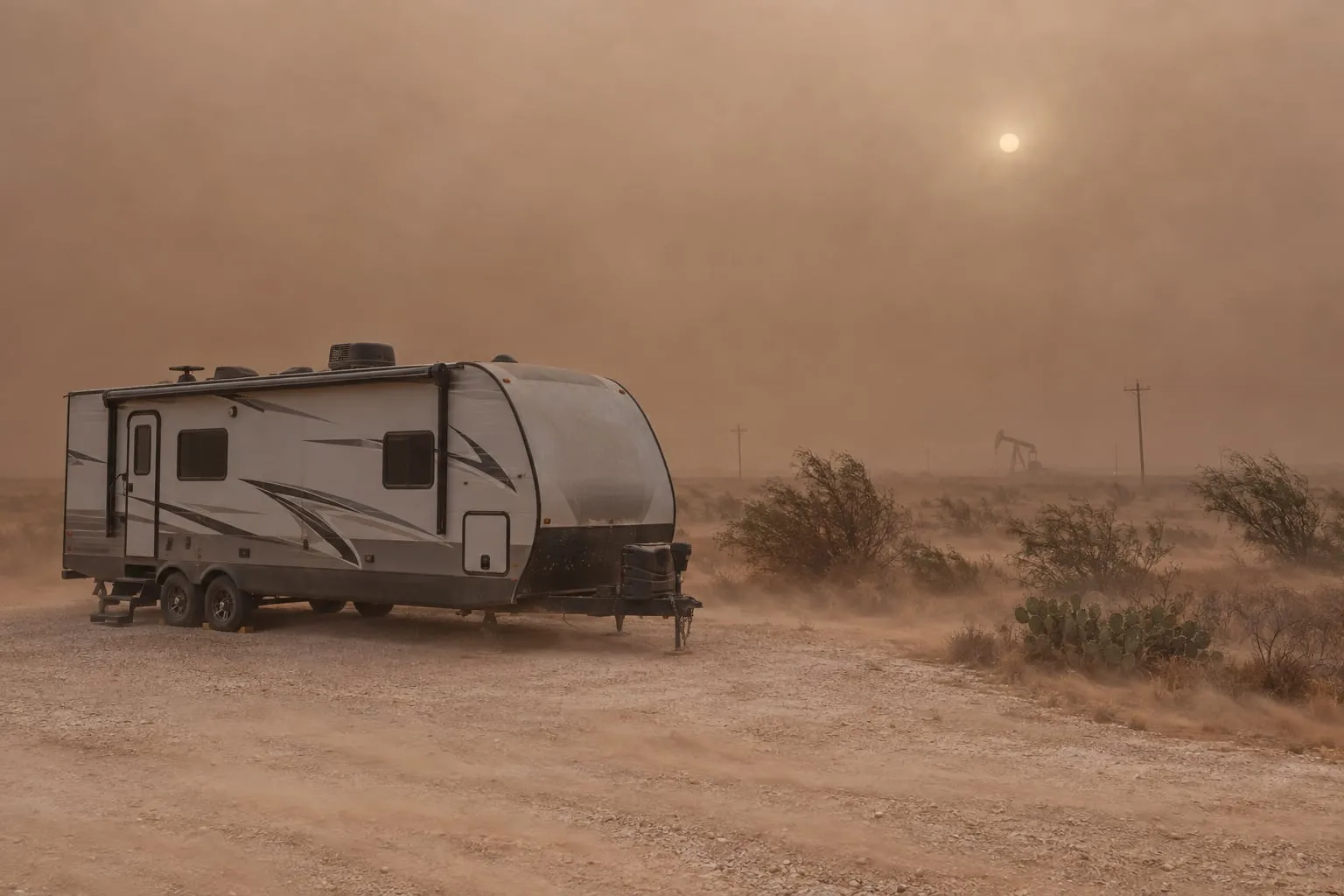
What the wind actually does here
The Weather Service office in Midland studies what it calls significant west wind events, and sets the bar at gusts over 35 knots — about 40 mph. In the cases it documents, measured gusts ran 45 to 50 knots, somewhere around 52 to 58 mph. That is not a storm in the local sense. That is a windy afternoon in March.
The dust rides along with it. The Weather Service puts it plainly: through late winter and early spring, blowing dust occurs frequently, because flat plains carrying only grass offer little resistance to strong wind. Visibility in most of those events runs one to three miles, and the sky is occasionally obscured outright. Anyone who has driven the loop in April has seen it.
Awnings
An awning is the single most common casualty, and it is worth being blunt about why: it is a sail bolted to the side of your house. It does not fail in a dramatic storm so much as on an ordinary afternoon when a gust arrives and nobody is home to roll it in.
The rule that works is simple. If you are not sitting under it, it is in. Retract it when you leave for a shift and retract it overnight, every time, until it is a habit you do not think about. Wind sensors and auto-retract arms help, but they react after the gust has already loaded the fabric. A rolled awning cannot be caught.
Dust, filters, and seals
Dust out here is fine and it finds its way in. It comes through tired window and door seals, around slide-out gaskets, and straight through your air intake. None of that damages a rig quickly; all of it wears things out faster than the maintenance schedule assumes.
- Check the seals before spring. Window, door, and slide-out gaskets are cheap and are what stands between the dust and everything else.
- Change filters more often than the manual says. Furnace and air-conditioner filters here load up faster than the interval was written for.
- Close up ahead of a front, not once the air has already gone brown. Windows, roof vents, and the slide toppers.
- Keep the slide-out tops clear. Dust and grit on a topper get dragged into the seal every time the slide moves.
One local note: the pads here are gravel and caliche, not poured concrete. That is normal for a working park and it is kinder to a rig than it sounds, but it does mean the ground around you contributes its own dust on a windy day. A mat at the door earns its keep.
Setting up so wind is not a problem
Some of this is out of your hands here, and it is better to say so. Every space is back-in, so your rig faces the way the space faces — you do not get to choose which side takes the wind. What you do control is everything you put outside it.
- Nothing loose outside. Chairs, mats, grills, and totes all move in a 50 mph gust, and they move into somebody else's rig.
- Stabilizers down and chocks in. A tall rig rocks in a crosswind; the less it moves, the less everything inside it works loose.
- Antennas and satellite dishes stowed when a front is forecast.
- Watch the roof after a big day. Vent covers and sealant are what wind finds first, and a roof check after a hard blow is five minutes well spent.
Questions about wind and dust
How windy does it get in the Permian Basin?
The Weather Service office in Midland treats a "significant west wind event" as gusts over 35 knots — about 40 mph — and has measured gusts of 45 to 50 knots, roughly 52 to 58 mph, in those events. Late winter and early spring are the season for it.
Should I leave my awning out?
Not unless you are sitting under it. An awning is the most common thing lost to wind out here, and it usually goes while nobody is home. Retract it when you leave and overnight.
How do I keep dust out of my rig?
Seals, filters, and pressure. Keep window and door seals in good shape, change the air filters more often than the manual says, and close up before a front rather than after the dust arrives.
Call and ask what is open. It is also a fair moment to ask how a space sits and what is around it — that is a better conversation on the phone than a guess from a map.